
Merchandise & Fulfillment
What nonprofits lose when merchandise logistics is improvised
Branded merchandise is one of the most visible touchpoints a nonprofit has with its supporters. Handled without a system, it becomes a source of delay, waste, and quiet reputational cost.
Vanguard Collective · Editorial desk · August 24, 2026 · 6 min read
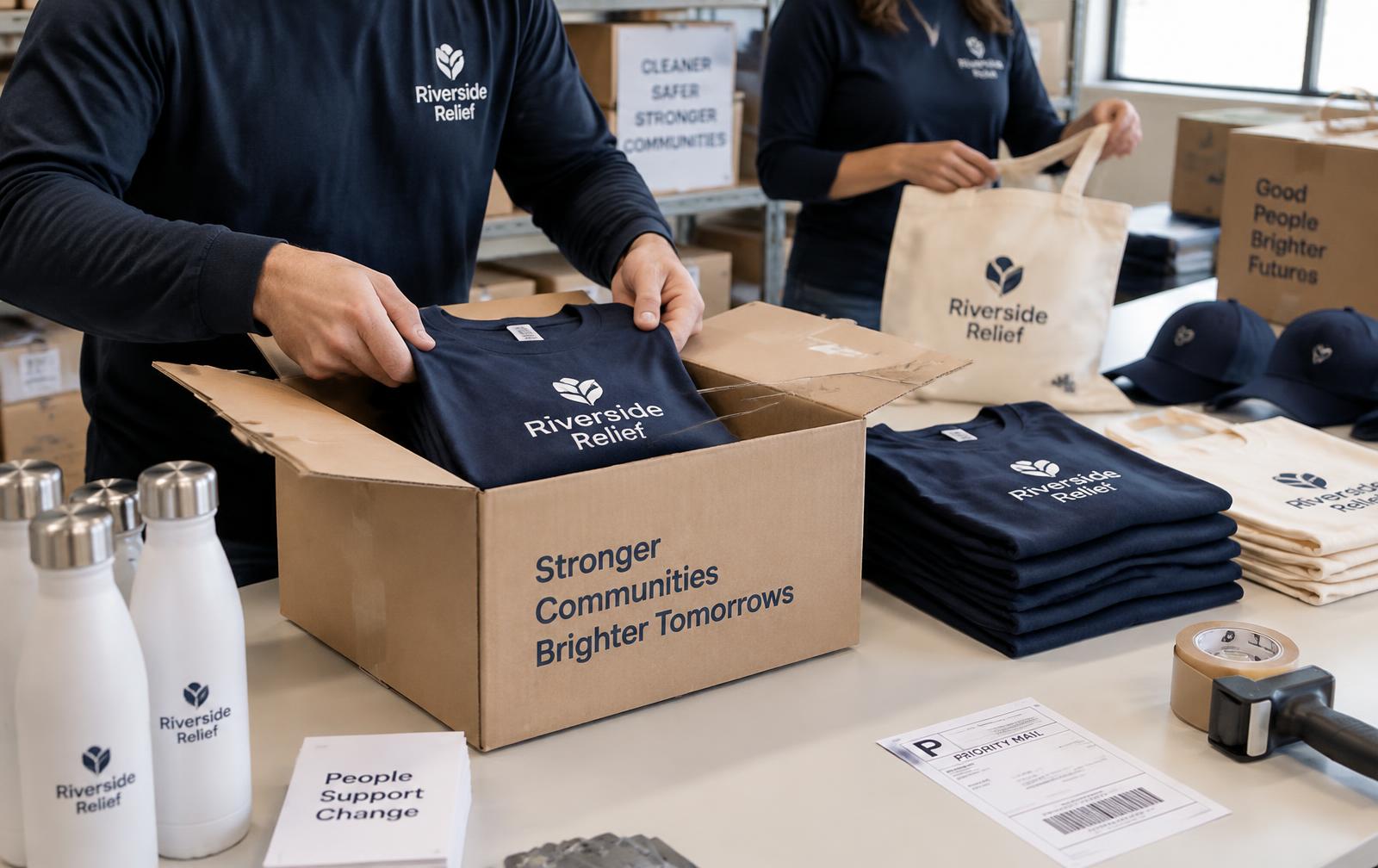
Nonprofit merchandise carries more weight than its cost suggests. A t-shirt mailed to a monthly donor, a tote bag handed out at a gala, a set of branded water bottles sent to a walk captain — each of these is a physical object standing in for the organization at a moment when the organization is not in the room. When it arrives late, in the wrong size, or not at all, the damage is not just the missed item. It is the impression that the organization does not have its own operations under control.
We see the same pattern across organizations that have not yet built a real merchandise process. Orders live in a spreadsheet a program officer maintains between other duties. Stock sits in a closet, a garage, or whatever storage a staff member has volunteered. Shipping happens in batches, by hand, whenever someone has an afternoon free. This works, barely, at a small scale. It fails predictably the first time a campaign succeeds — the moment a fundraising push, a conference, or a viral moment produces more orders than one person can pack in a weekend.
Where the breakdown actually happens
- Production runs get sized to guesswork rather than to a real forecast, leading to expensive rush reorders or dead stock.
- Storage is scattered across whoever has room, which means nobody can say with confidence what exists or where it is.
- Shipping is manual, so a spike in demand becomes a backlog measured in weeks rather than days.
- Quality control has no owner, so a misprint or a wrong size is caught by the supporter, not by the organization.
“A donor does not distinguish between a mission problem and a fulfillment problem. A late shirt reads the same as a broken promise.”
What a managed process replaces it with
Vanguard Collective handles merchandise logistics for nonprofit clients end to end: production planning sized to real demand, centralized storage that is inventoried rather than guessed at, and shipping that runs on a schedule instead of whenever someone has time. Staff get their hours back for program work. Supporters get what they were promised, when they were promised it.
The organizations that make this change usually do it after a specific failure — a gala order that arrived a week late, a campaign that sold out of merchandise in three days and had no path to reorder. The change itself is not complicated. It requires treating merchandise as a logistics function with an owner, rather than a task absorbed into someone's existing job.